
Every figure skater on the U.S .Olympic team carries the trauma of the plane crash that rocked their community one year ago, none more than Max Naumov.
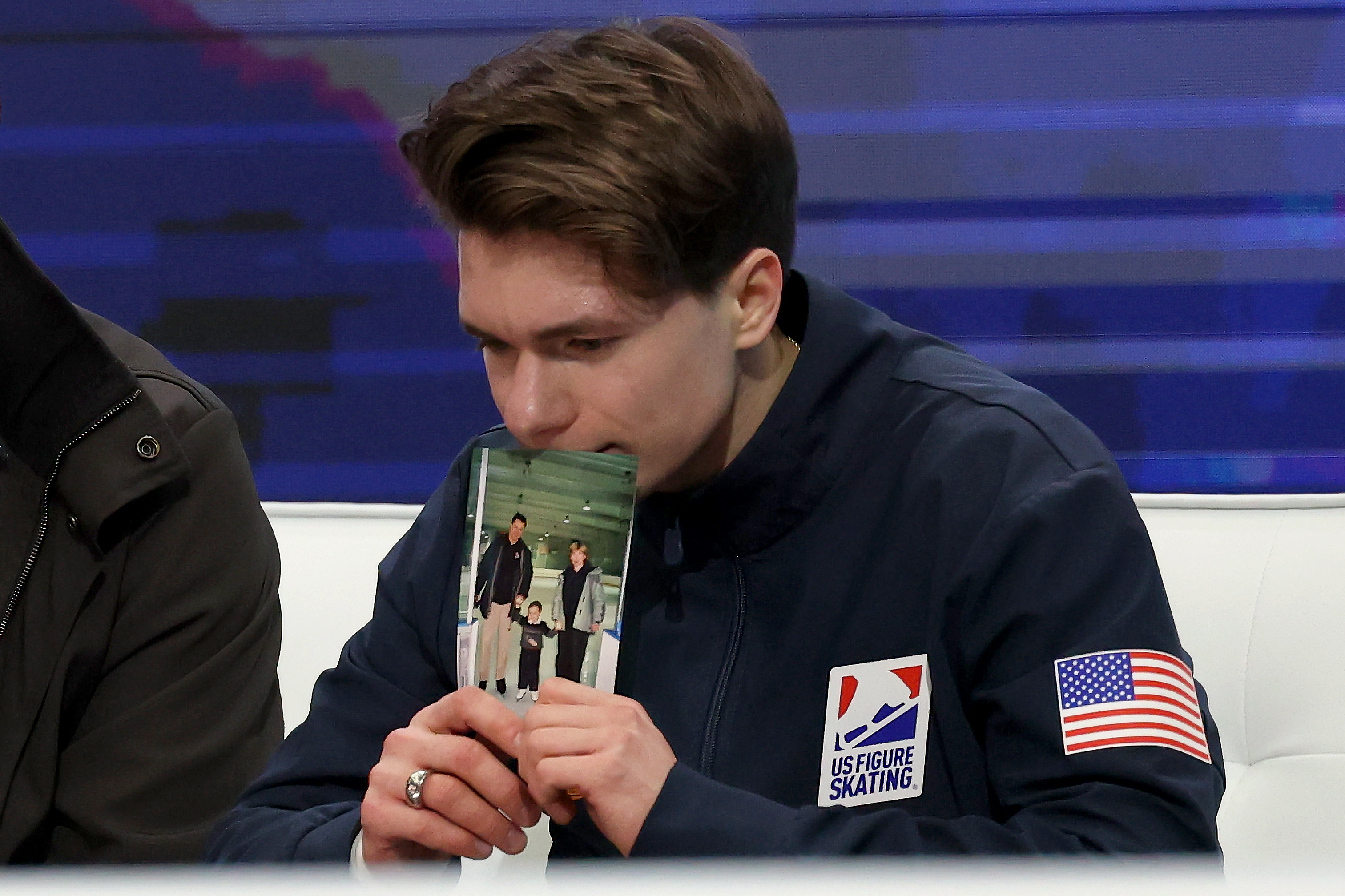
MILAN — Four weeks ago, Maxim Naumov sat on the rinkside couch in St. Louis, shoulders heaving as he gave into the weight of grief. He’d just finished one of the two routines that would soon send him to the 2026 Olympics in Milan. In his hand, he held a family picture of himself as a child, holding the hands of his parents. It was a poignant scene, because Max was the only one in that photo here to appreciate the moment.
Naumov’s parents, Vadim Naumov and Evgenia Shishkova, died a year ago in a plane crash, two of so many lost in an accident that devastated an entire sport. Max rededicated himself to his craft in the weeks after the crash, and he’ll carry the burden of the tragedy for the rest of his life … starting with these Olympics.
One year later, the shock has subsided, but the pain persists. Every figure skater on the Olympic figure skating team carries the trauma of that terrible night, none more than Max Naumov.

The tragedy of Flight 5342
The details remain heartbreaking and horrifying even now.
Flying in and out of Reagan National, whose runways line the west bank of the Potomac River, is tricky and even treacherous on clear days. Pilots must navigate the restricted and crowded airspace around Washington, D.C., with aircraft from multiple airports in close proximity at all times. Coordinating so many aircraft in the same small space at the same time requires skill and precision from both pilots and air traffic control.
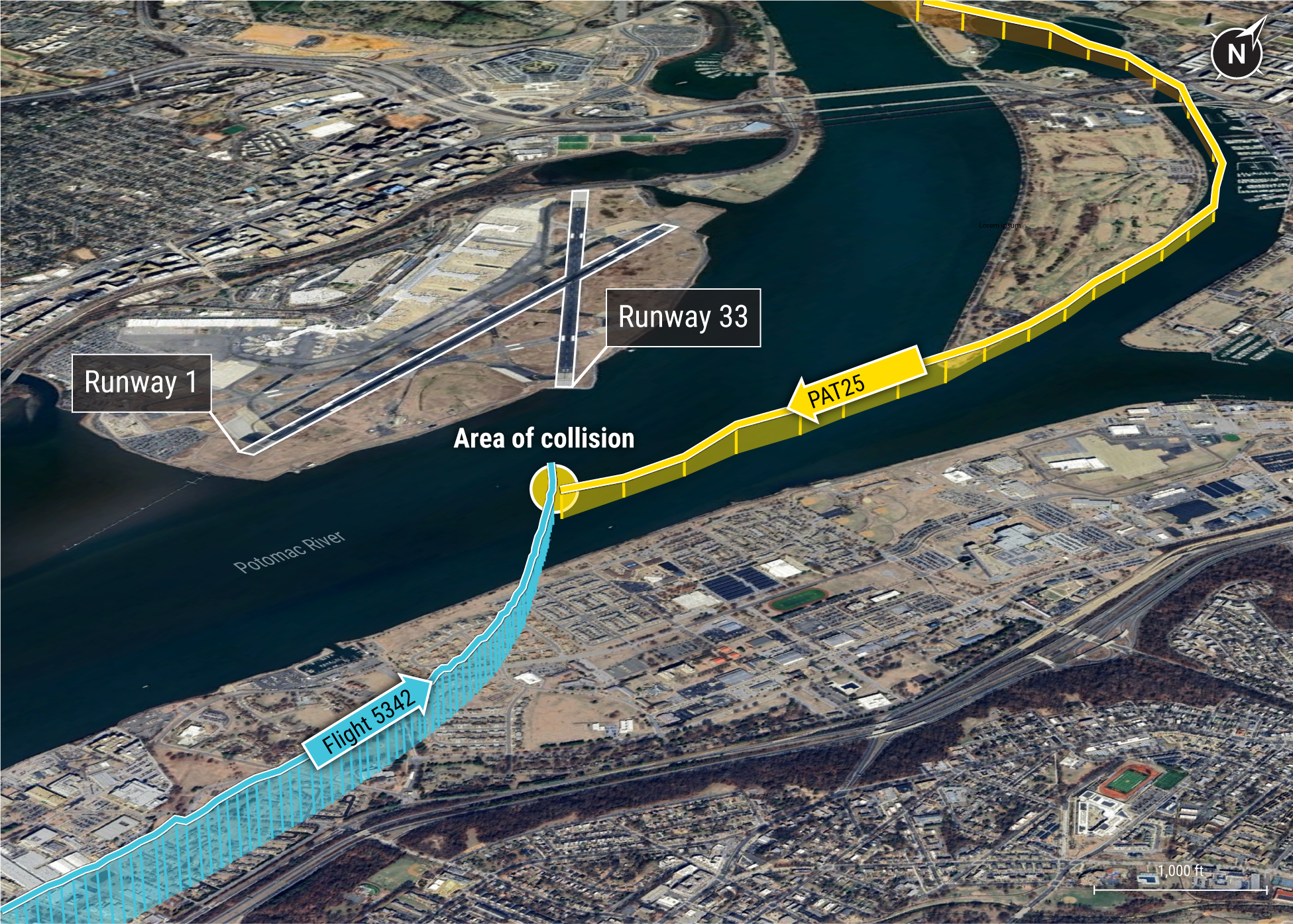
On Jan. 29, 2025, American Airlines Flight 5342, bound from Wichita into Reagan National Airport in Washington, D.C. was on its final approach shortly before 9 p.m. The sun had gone down several hours before, and the lights of the city stretched as far as the pilots could see. But as the plane was approaching its runway from the southeast over the Potomac, a Black Hawk helicopter on an annual evaluation collided with the plane, sending both aircraft plunging into the Potomac nearly 300 feet below.
Twenty-eight members of the skating community were on Flight 5342, including several skaters, coaches and parents from the Washington Figure Skating Club and the Skating Club of Boston. The skaters were young and promising, talented amateurs who’d stayed in Wichita after the U.S. Figure Skating Championships for additional clinics.
Doug Zeghibe, CEO of the Skating Club of Boston, had gone to bed early that Wednesday night, because he was fighting off the flu. But he was soon awakened by the sound of his phone blowing up with calls, texts and messages. The club maintains a phone tree of management and members, and group texts sprang up as members tried to determine who exactly was on the flight.
Zeghibe remembers getting texts with messages like, I’m OK. And he would fire back, Great, you’re OK. Are you OK because you were on that flight, or are you OK because you weren’t on that flight?
“It was a pretty anxiety-ridden night, I have to say,” Zeghibe told Yahoo Sports recently.
Slowly, the true horror of the night became clear, and the news was as bad as it could possibly be. All 64 passengers and crew aboard Flight 5342 died, as did all three crewmembers on the helicopter. The crash was the deadliest on American soil since November 2001, and the skating community suddenly had to reckon with devastating loss.
“They were family,” Zeghibe said. “These members and parents and coaches, they were with us six days a week, the coaches seven days a week.”
‘They lit up the rink’
Figure skating clubs are skating’s grass-roots organizations, operating under the U.S. Figure Skating guidelines and bringing skating to youth and adults all over the country. The Skating Club of Boston dates back 115 years, and counts among its members illustrious alumni like Kenley Albright, who won a gold medal 70 years ago in Cortina. The Washington Figure Skating Club is the oldest and largest in the DMV (District-Maryland-Virginia) area, with over a thousand members.
Zeghibe arrived at the Boston club’s headquarters to find local, national and international media, from the BBC to Brazil, gathered and looking to learn more about the six people connected to the club who had been on board the plane. “You suddenly realized then that it was more than just the personal impact of what had happened to our community,” he said. “This was a global news story.”
In the immediate aftermath of the crash, the Washington Figure Skating Club opened two of its rinks to skaters to process their grief on the ice. They set up small memorials for their lost members, and brought guest books where skaters could write their remembrances of their friends and teammates. The skaters who had been at the clinics had promising futures, and to see that future snuffed out simply crushed so many of their friends and coaches who hadn’t been on that flight.
“They just, you know … they kind of lit up the rink,” Washington club president Heather Nemier said recently. “They were always people you look forward to seeing skate.”
In a tragic echo, the flight wasn’t even the first plane crash to devastate the figure skating community. The entire United States figure skating team, including many members from the Skating Club of Boston, died in a February 1961 plane crash near Brussels.
“You felt this heavy, dark cloud. You knew something horrible had happened that nobody was talking about,” he recalled. “Myself, and others who are older and lived through it and lost friends, we all made the group decision that this has to be talked about, that we can’t leave folks alone to mourn.”
In the days and weeks after the crash, U.S. Figure Skating and the United States Olympic and Paralympic Committee arranged for mental health support and grief counseling. The Washington skating club connected its skaters with therapists and provided therapy dogs to help its members through their trauma.
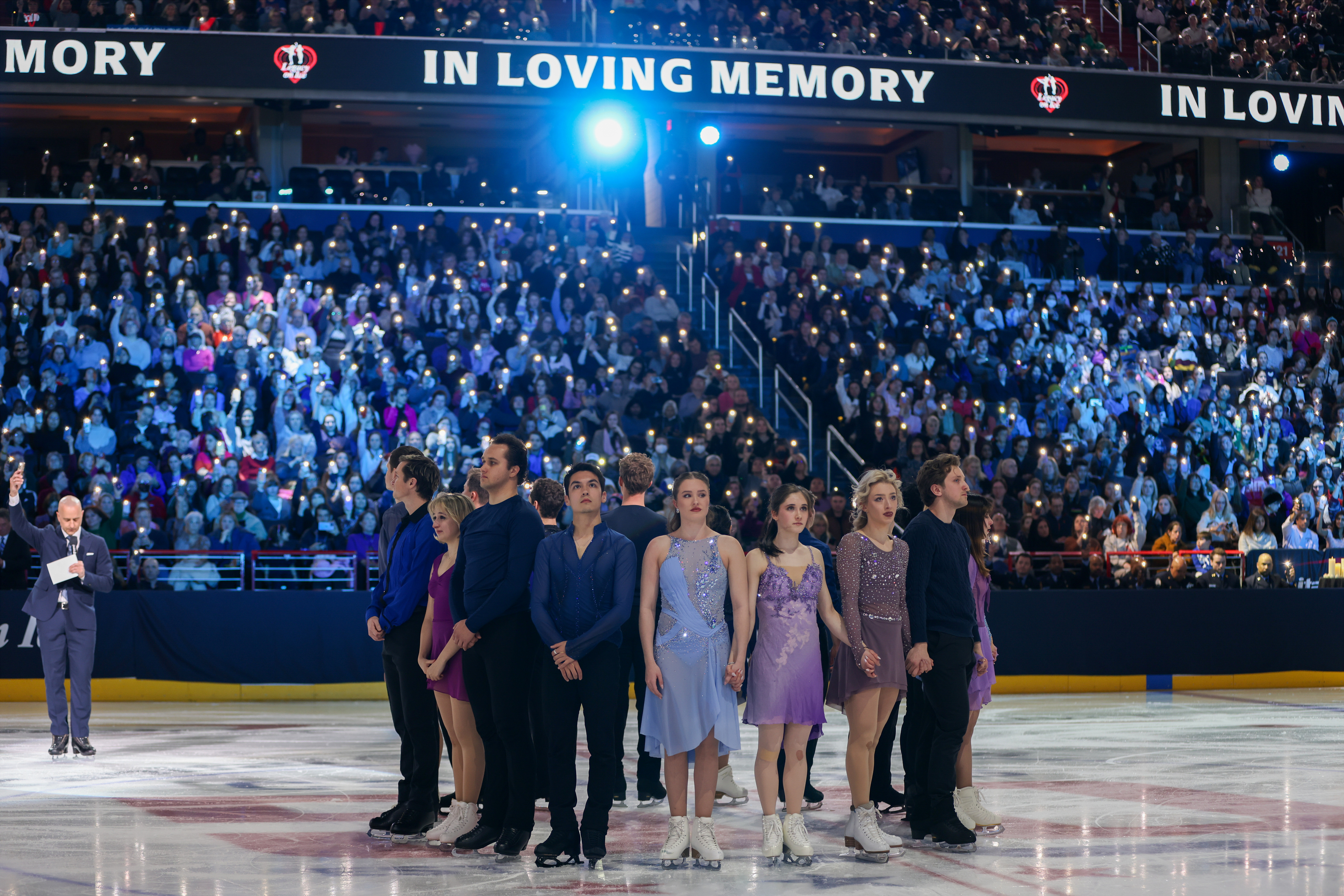
The skating community helped its own wherever it could. In March, dozens of skaters, including current Olympians Alysa Liu, Amber Glenn and Ilia Malinin, gathered in Washington, D.C for “Legacy on Ice,” a benefit to aid families and first responder organizations. Tributes at this year’s 2026 U.S. Figure Skating Championships in St. Louis included the Skaters’ Cookbook, a project planned in part to honor two sisters who died on Flight 5342.
‘Systemic failures
An NTSB report released just days before the start of the Milano Cortina Olympics declared that the crash was the result of “systemic failures in airspace design, safety oversight and risk management by the Federal Aviation Administration and the U.S. Army.” The report indicated that the problems in the D.C. airways which led to the crash were longstanding ones, including the pathways of helicopters and the depth and sufficiency of communication between ground controllers, helicopters and fixed-wing aircraft.
The NTSB also faulted air traffic control, noting that “the high workload during a period of elevated traffic reduced air traffic control’s ability to monitor developing conflicts and provide safety alerts.” Only one flight controller was working both helicopter and plane traffic in the area.
The board issued dozens of safety recommendations to the FFA, the Army and several other government agencies. Most painfully, the NTSB determined that the crash was 100 percent preventable, and a $400 GPS device could have given pilots nearly a full minute’s warning prior to the collision.
“It was just, it turns out,” Zeghibe said, “a needless and avoidable accident.”
Max Naumov’s triumph
In the year since the accident, the skating community has healed, but scars remain. “I think we have truly come together in ways that we never would have seen because of this, and it has become really a tight-knit community,” Nemier said. “They're very supportive of each other, especially when they go to competitions, and it's definitely been a bonding experience for us.”
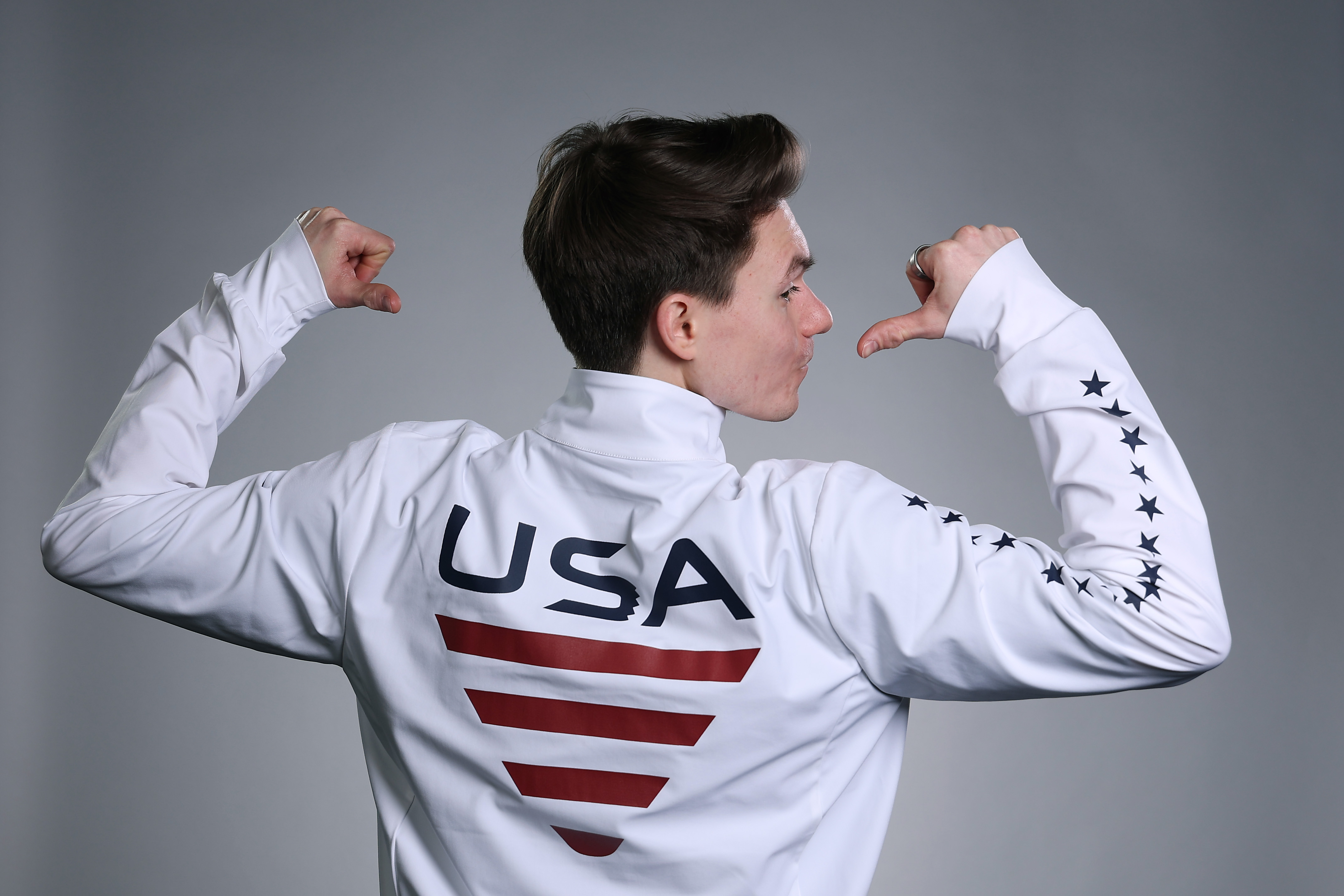
No skater has faced a harder journey back from the night of January 29, 2025, than Max Naumov. One of his final conversations with his parents involved his chances for making the 2026 Olympic team, and in St. Louis, he put the finishing touches on a season that culminated in an Olympic berth.
“I find that in times of really difficult emotional stress, if you can just push yourself a little bit more and almost think, What if I can do it? What if, despite everything that happened to me, I can still go out there and do it?” he said in St. Louis. “That's where you find strength, and that's where you grow as a person. And that's exactly what's been getting me through every day.”
“Being able to see him push through even the thoughts of whether or not he wanted to continue skating, that was inspirational,” said fellow skater Jimmy Ma, who trains with Naumov in Boston. “I'm very proud of him.”
“Max has always been a hardworking kid, but you see him reapproach his training and his commitment to the Olympic team. … It was always about him and his parents working together for him to make the team. They were a unit. To watch Max continue that effort as a team, but with both of his parents having to be there with him in spirit and not physically, I'm just thrilled for him.”
He pauses a moment and adds one more thought. “I do wonder, is this like — I won't even say a silver lining — is this a small silver string in this whole horrific year?”
Max Naumov will have the hope and love of an entire nation behind him, even if the two people he needs most can’t be beside him.
Category: General Sports


