
Ski jumping has been pushed into the spotlight after a whistleblower uncovered a cheating scandal that involves, of all things, crotch manipulation.
MILAN — Adrian Livelten hunched over a sewing machine last March on the eve of the men’s ski jumping competition at the Nordic World Ski Championships.
The suit technician for Norway’s national ski jumping team brazenly made alterations to suits belonging to the country’s two top contenders after those suits had already passed inspection. Livelten did this in plain view of Norway ski jumping head coach Magnus Brevik, seated in a chair halfway across the room.
What neither Livelten nor Brevik realized at the time was that someone was recording them in secrecy from behind a curtain, someone who intended to distribute the video far and wide the following day. The damning footage shared by the anonymous whistleblower shook the sport of ski jumping, bringing out into the open the cheating that happened behind closed doors.
When officials from the International Ski and Snowboard Federation (FIS) seized suits belonging to reigning Olympic champion Marius Lindvik and fellow Norwegian Johann André Forfang, they found rules violations that initially went unnoticed during the competition. Stiffer, non-elastic thread had been sewn into the suits to pull down the crotch area during flight, increasing the surface area and creating more aerodynamic lift in a sport where inches can be the difference between medaling and missing the podium.
"Probably the most shocking part was that it was Norway because they’ve always been considered one of the more standup teams,” said Johnny Spillane, the first American to medal in the sport of Nordic combined, which consists of ski jumping and cross-country skiing. "Everyone is going to push the limits. That hasn't changed and that probably will never change, but this was deliberately altering a suit after it had been tested in order to cheat. This was the most blatant cheating I've heard of."
The Norway cheating scandal highlighted two irrefutable facts about the crotch-obsessed sport of ski jumping on the precipice of the 2026 Winter Olympics. There is, as Finnish coach Petter Kukkonen put it last April, “a culture of cheating” in ski jumping. And the battleground between unscrupulous teams and rule-upholding regulators is often below the belt.
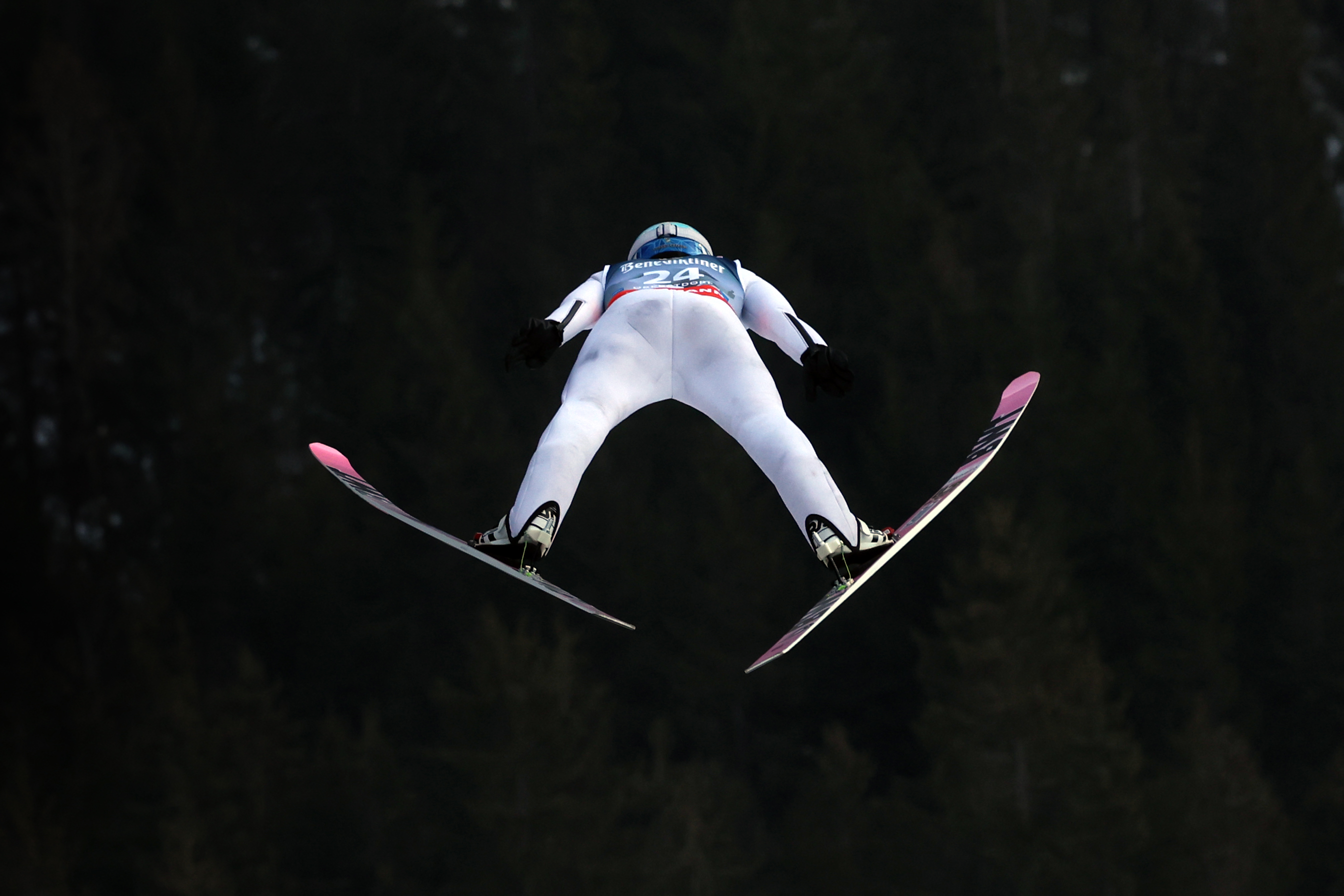
Male ski jumpers must wear tight-fitting suits that are no more than 4 centimeters larger than their body measurements at any point. Most national teams seek to find every millimeter they can because a bigger, baggier suit catches more wind and provides more lift during flight than a smaller one does.
Fittingly, the most advantageous place to enlarge a ski jumper’s suit is the crotch area. Adding just a centimeter of fabric to the circumference of that part of a suit increases flight distance by approximately 2.8 meters — or more than nine feet — according to a study published by Frontiers in Sports and Active Living in October 2025.
Athletes chasing that competitive advantage have resorted to trickery when having their body dimensions measured prior to a competition. The more they reduce the distance between their inseam and the floor when FIS equipment controllers record their body measurements, the lower regulators will allow the crotch of their suit to hang while airborne.
In November 2020, Kukkonen told Finland’s leading tabloid newspaper that athletes were stuffing dish cloths and sponges in their underwear during body measuring. In a recent appearance on the Skirious Problems podcast, Austria’s Mika Vermeulen revealed that when he competed in nordic combined earlier in his career, veterans told him before his first body measuring, “It’s very important to tape your c*** back.”
Vermeulen later described ski jumpers putting modeling clay in their underwear to lower their crotch-to-floor measurement by five centimeters.
“People used to cheat a f*** ton,” Vermeulen said.
Salacious stories like those were already pushing ski jumping out of the margins and into the mainstream entering these Olympics. Then the German tabloid Bild sparked further curiosity in January when it reported that ski jumpers have worn condom-like sleeves filled with hyaluronic acid to enlarge themselves before measurement.
“When I read that article, all I could do was shake my head,” USA Ski Jumping and Nordic Combined sport director Anders Johnson said. “If that is really what other people were doing previously, I can't believe that that's how far people have taken it.”
‘You name it, people have tried it’
Cheating in ski jumping isn’t a new phenomenon. Athletes have been pushing boundaries and exploiting loopholes ever since the sport’s governing body began setting rules restricting how far they can fly.
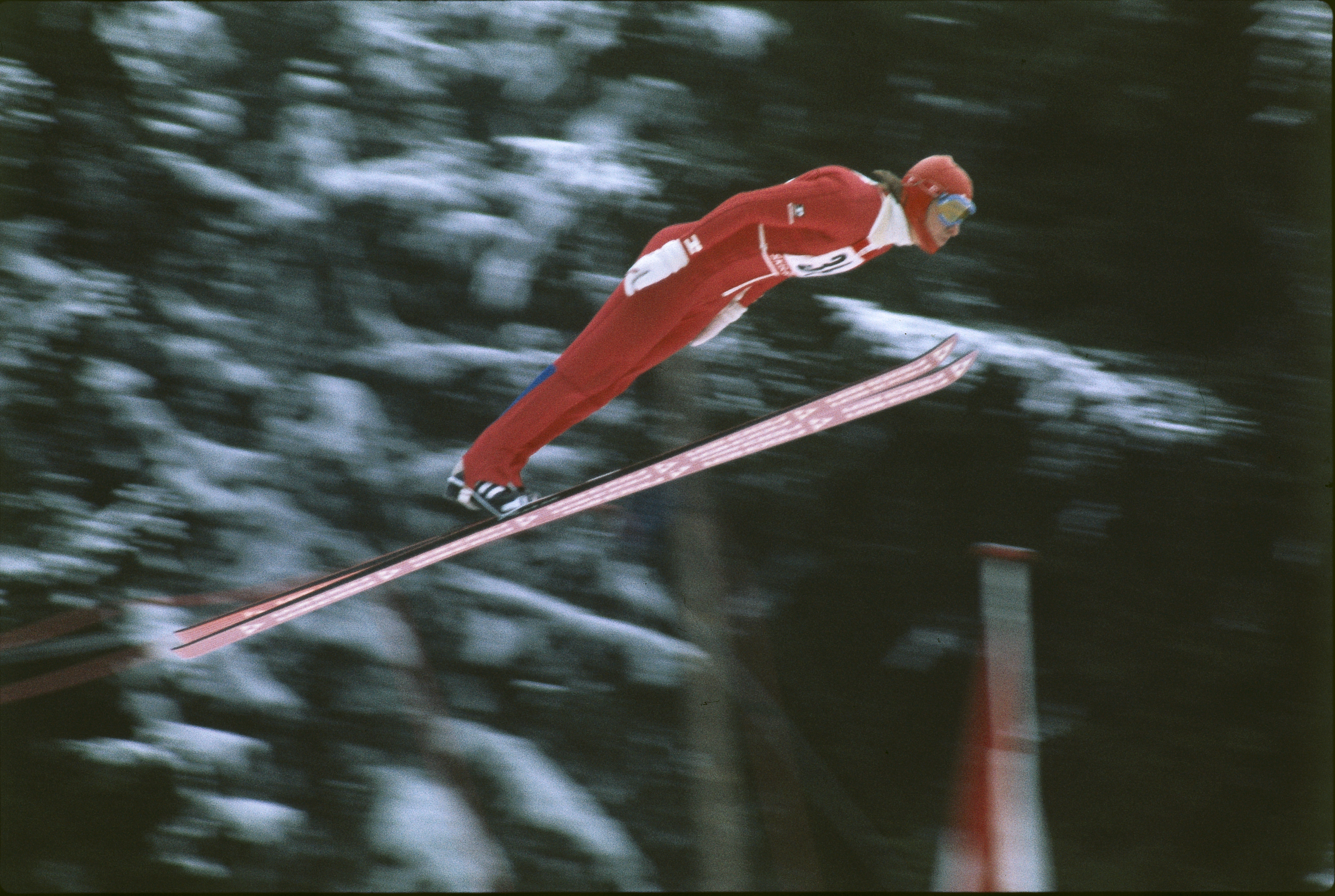
In the mid-1970s, the Austrian national team unveiled suits that were highly permeable in the front but did not allow air to pass through in the back. The resulting parachute effect helped Austrian jumpers take gold and silver in the men’s large-hill event at the 1976 Winter Olympics. Seventeen-year-old Austrian prodigy Toni Innauer set a world record the following month and then bettered it two days later.
The success of those suits inspired copycat attempts, some well-executed, others not so much. Former American ski jumper Jeff Hastings recalls an early 1980s competitor who “put a garbage bag in the back of his suit to try to get the ‘76 Austrian effect.”
“Everybody could hear him up there rustling like crazy,” Hastings said. “It wasn’t even effective but he was just trying to get a little advantage.”
Detailed rules governing the air permeability of ski jumping suits soon went into effect, but that didn’t deter athletes eager to find even the slightest competitive advantage. Retired ski jumpers have admitted to coating the back of their suits with hairspray or slathering on wood glue in an effort to reduce air flow, improve lift and fly longer.
“You name it, people have tried it,” Spillane said.
As the sport’s deep-pocketed superpowers stopped buying suits from third-party manufacturers and started hiring sophisticated specialists to produce them in-house, new opportunities to cheat have materialized over the past 10-15 years. Teams sought to gain an advantage by creating custom suits for athletes that exceeded their body measurement by as much as possible without resulting in a disqualification.
The ideal place to add material is where the legs converge, according to Dr. John Goff, visiting physics professor at the University of Puget Sound and author of the book Gold Medal Physics. The crotch area of the suit is naturally stretched wide with a jumper’s legs in a “V” position during flight. It’s also close to the body’s center of gravity, helping an athlete gain lift without sacrificing control.
“The crotch region, where the legs part, is kind of a sharp transition point,” Goff said. “If you can put some kind of material there to smooth that out, you can reduce the turbulence and increase the lift for the skier. That can have a pretty big influence on the flight.”
For FIS regulators seeking to prevent teams from gaining an advantage, the process starts with athletes stripping down to their underwear. Athletes must have their body dimensions measured before competitions in the presence of an FIS equipment controller, a team official and a qualified doctor or nurse.
Since 2023, those measurements have sometimes been taken with the help of a 3D body scanner. Before then, it was always a manual process. As American Nordic Combined skier and 2018 Olympian Ben Berend once detailed in a blog post, that made the crotch measurement part of this process particularly awkward.
“The process consists of standing with your feet 40 cm apart wearing nothing but underwear,” Berend wrote in 2016. “Then a metal rod is moved up as high as possible until it hits your junk. The measurement is essentially junk to floor in centimeters.”
The intrusiveness doesn’t end once the measuring process is over. Athletes also must endure what FIS described in a 2023 memo as a “visual crotch area inspection.” A supervising doctor or nurse checks the athlete “for any irregularities in the genital area” — in other words an artificial prosthesis in the athlete’s underwear that could reduce the crotch-to-floor measurement.
As a result of stories like the ones shared by Kukkonen and Vermeulen, the process is fraught with suspicion that national teams are finding ways to bypass the rules.
A friend recently sent Hastings a screenshot of one of the world’s top-ranked ski jumpers in mid-flight last year.
“The crotch on his suit practically came down to his knees,” Hastings said. “I’m exaggerating a little bit, but it looked like he had a diaper on.”
Between suspicious images like that one, unconfirmed gossip about which teams were cheating and the knowledge of how much difference a little extra fabric can make, Johnson admits it creates a toxic culture.
“If one team starts cheating, then two or three start doing it,” Johnson said. “Once you have the best nations in the world doing it, then everyone kind of has to follow suit. It just spreads like wildfire and then once it does, it’s really hard to get back.”
‘Doping, just with a different needle’
The chicanery mostly occurred in secret until the anonymous whistleblower shined a spotlight on Norway’s dishonesty and turned the birthplace of ski jumping into a symbol for everything wrong with the sport. Austria, Slovenia and Poland filed formal protests against the Norwegians during the World Championships and called for their results to be annulled.
“This is doping, just with a different needle,” former German Olympic champion Jens Weissflog told the German newspaper Bild at the time.
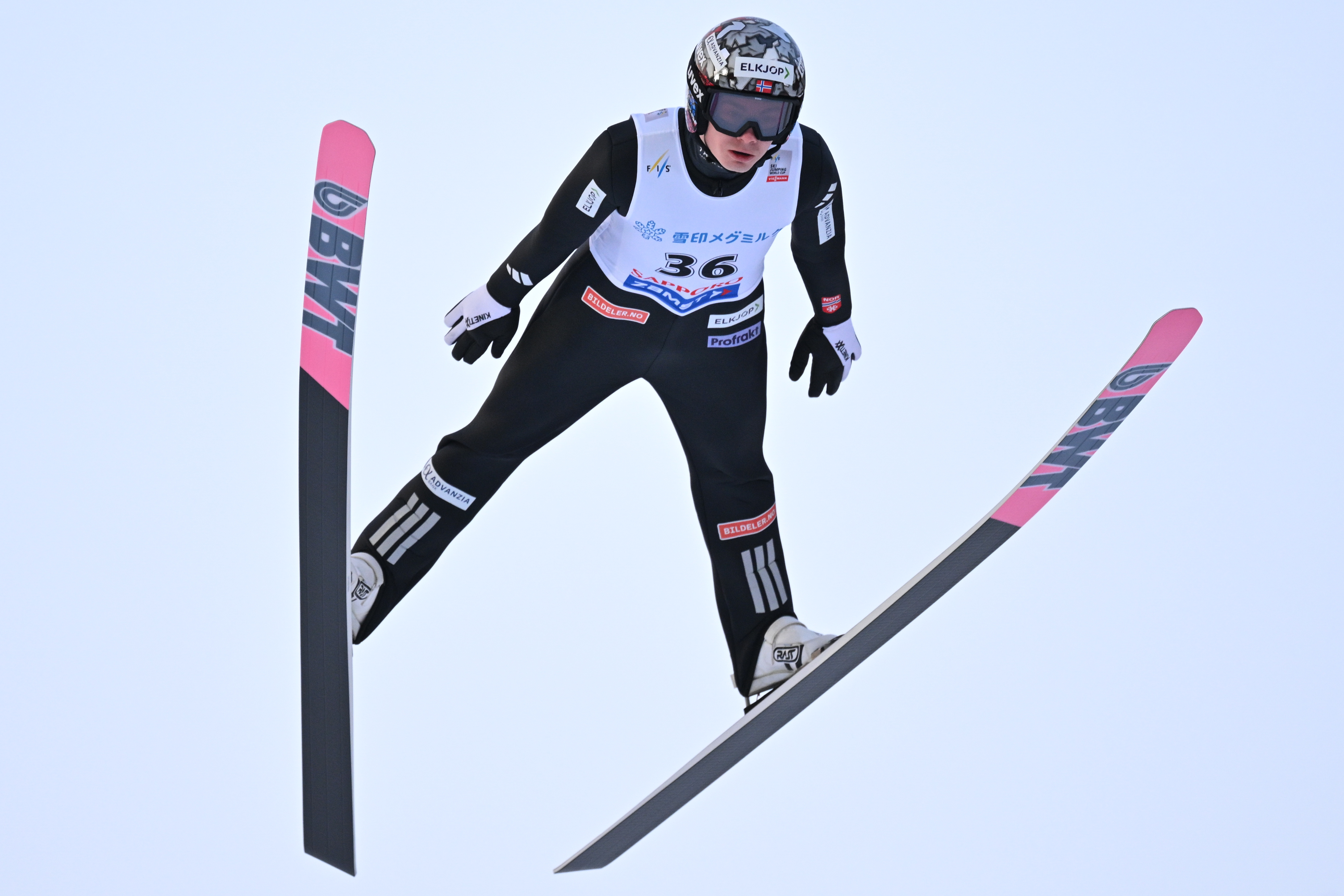
Lindvik and Forgang claimed ignorance, insisting they never would have jumped had they known their suits were rigged. When their coaches backed them, the Norwegian ski jumpers received suspensions of just three months, enabling them to return in time for the 2025-26 World Cup season and the Olympics, where the men’s competition begins on Feb 9.
The penalty was harsher for Livelten, Brevik and Norway assistant coach Thomas Lobben, each of whom confessed to being part of the conspiracy. On January 15, an independent ethics panel backed the FIS’s request for a punishment strong enough to serve as a deterrent against future cheating, suspending the trio for 18 months apiece.
“In (the panel’s) view, now is indeed the appropriate time to put down a clear marker to what is not acceptable,” the panel’s scathing ruling read.
For many in American ski jumping circles, the Norway cheating scandal entangled close friends. In 2022, USA Ski Jumping signed a formal partnership with the Norwegian national team for the current Olympic cycle to hold joint training camps and coaching clinics and to collaborate on sports science.
While Johnson doesn’t condone what Norway did, he also bristles at how the Norwegians have become “the scapegoat for a much broader issue within our sport.”
“There has been a lot of hypocrisy from other nations,” Johnson said. “I don’t have any personal beef with any of these teams, but it was incredibly disappointing for me to see the response from some of the nations. I think everyone needs to take a look at themselves in the mirror. No one can say they were fully clean. They can only claim they are because they didn’t get caught.”
Embarrassed by the Norway scandal, FIS has since hired new equipment control coordinators and introduced sweeping reforms for the 2025-26 season. The changes include increased use of 3D scanners for pre-event body measurements, more precisely defined rules for how suits can be cut and shaped and more training for equipment controllers who oversee pre- and post-jump inspections.
Harsher sanctions can now be issued for rules violations during 3D measurement or for the manipulation of a suit after it has passed inspection. Athletes disqualified for an equipment violation during a competition will receive a yellow card. A further transgression will result in a red card and suspension from the following event.
To Johnson and many others in the ski jumping community, the most notable change is one that has gone unmentioned in any FIS press release.
In the past, Johnson found that “it was much easier for FIS to discard or disqualify athletes from smaller nations because they didn’t have that political pull in the sport.” This year, highly ranked jumpers from prominent nations have been cited for equipment violations, athletes like Slovenia’s Timi Zajc, who was tied for second place at an event in Germany earlier this winter when he was disqualified for suit violation.
“This year, it doesn’t seem to matter if you’re from Austria or Slovenia or Poland or the United States,” Johnson said. They’re enforcing the rules for everyone.”
As the world’s top ski jumpers prepare to showcase their talents on the Olympic stage this month, the obvious question is whether the competition will be fair. Will the threat of stricter rules and tougher punishments be enough to deter cheaters? Or will the pursuit of Olympic glory tempt some countries to try to skirt the rules?
“Going into this Olympics, I have a lot more faith and trust in the system,” Johnson said, “but I still have my reservations that teams are really going to be in compliance, that they’re not going to be trying something new.”
Category: General Sports


