Or: are we having fun yet?

First of all, I would like to lead this piece off with an apology to my mother, grandmothers, several aunts, and any other relatives who may be offended by the repeated use of a certain scatological expletive in this piece (my daughter and nieces fortunately aren’t old enough to read). I hope you all understand that I really am using it to make a point and not just because I can’t think of anything better to say. I would also like to apologize to Joshua for any trouble brought about by the SEO-unfriendliness of this article’s title and topic, though it’s worth noting that is itself a symptom of what I am criticizing.
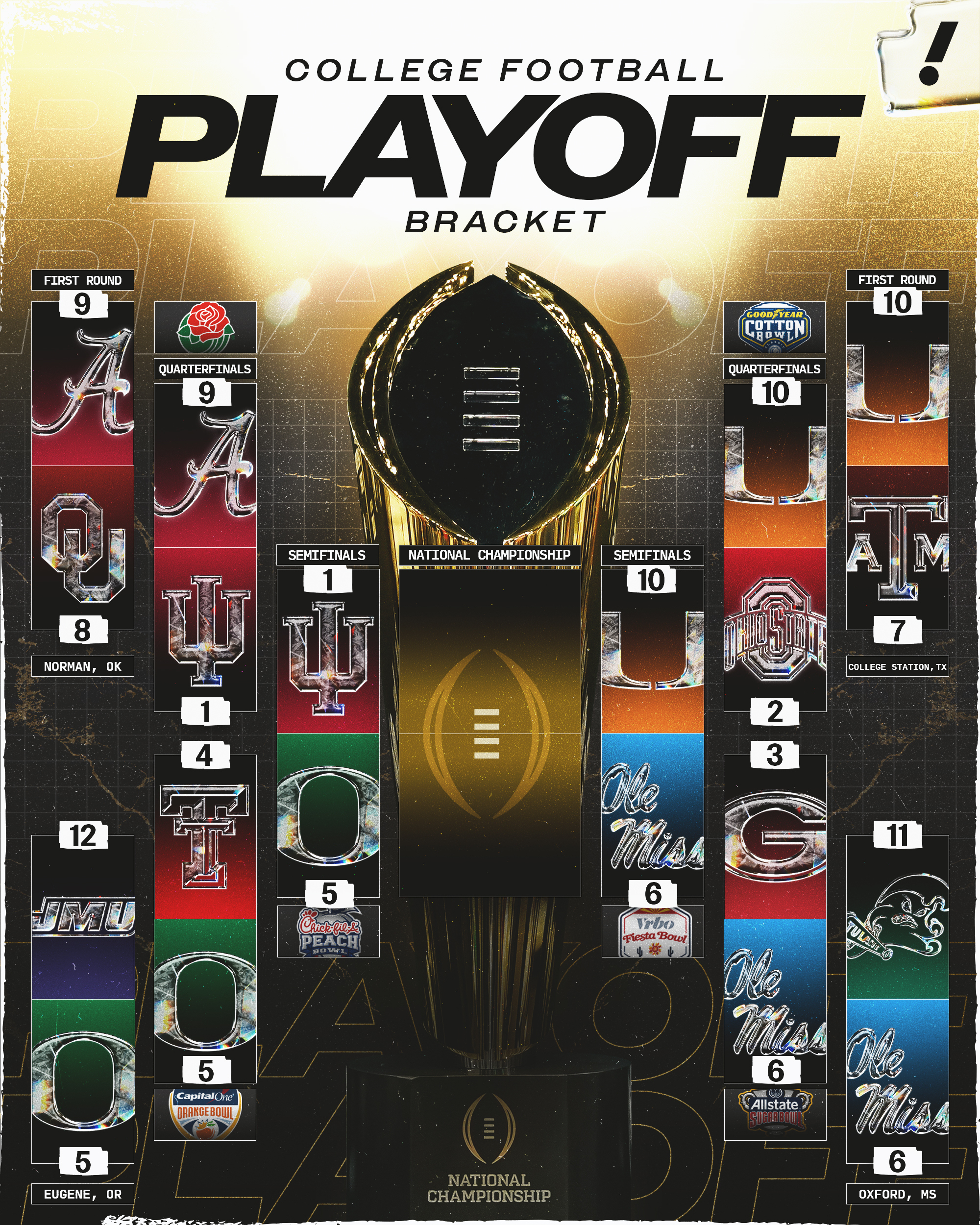
Secondly, a disclaimer: this is not a piece about Notre Dame’s exclusion from the College Football Playoff. It is not attempting to relitigate the committee’s decision, or making an argument that the playoffs or the sport are made worse by that exclusion. The topic is not a primary, secondary, or indeed even a tertiary focus of this piece. It will only be discussed here to the extent that certain events of the this season illustrate the larger trends I am describing, which are far bigger than any one team or decision. The currently active postseason will barely be mentioned.
With those two things said, let’s get into this: this season was by far the least fun I can remember watching and experiencing as a fan. I spent far more of it annoyed than enthralled. Again, this is not about Notre Dame’s missing the playoff or indeed even about Notre Dame in particular; in fact, the realization that I absolutely despised this season of football started setting in around the beginning of November, when it looked for all the world like the Irish were a lock for the playoffs.
I have had friends who are alumni or fans of schools all over the country, including arch-rivals of Notre Dame, describe the same feeling: the fun is being drained out of the sport we love as our passions for it and our alma maters have been identified, quantified, monetized, and cynically exploited by people who don’t care about us or it. From a media that treats the sport as a reality show to a nakedly political, Calvinball-playing rankings and postseason selection process to the loss of rivalries and traditions that define the sport, fans of pretty much every school in the country can point to something that is changed too fast in a way that has, in some way or another, left them feeling like they lost something they loved.
In trying to put together my thoughts on what exactly was happening to the sport I love, my mind was drawn to a trend I first encountered my day job (which is, incidentally, increasingly more fun and less irritating than following college football thanks to the phenomena I am about to describe). That term is: enshittification.’
What is Enshittification?
Coined by the Canadian journalist Cory Doctorow, enshittification denotes a gradual decline in the user experience of two-sided online platforms, brought about almost inevitably by the need of those platforms to prioritize enterprise clientele over individual users to make a profit. As startups or early entrants to the market who don’t have to demonstrate immediate returns, these platforms lure in users with new and improved features. But over time, as the pressure to deliver ROI grows stronger and oligopolic control of the market consolidates, they gradually compromise those advantages to draw in more sustainable revenue from other parties (usually advertisers). The result of this shift in focus away from the end user and toward those seeking to profit off them degrades the user experience, erasing many of the advantages that drew those users in in the first place. In short: what you once loved turns to shit, hence the origin of the term.
You don’t have to be a Luddite or a techno-pessimist to see examples of this all around you. Google search, which once revolutionized web browsing by instantly pointing users to the most popular and relevant results, now forces one to trawl through layers of garbled AI answers, artificially boosted sponsored content and optimized-for-SEO headlines before actually getting to something useful. Online streaming, having elbowed aside cable television with convenience, ease of use and content access, has now recreated and heightened all its drawbacks from cost to service disruptions to declining content quality. Social media is so thoroughly enshittified that wading through the shit, whether it’s on Facebook’s tabloid-cum-wire fraud market for the elderly or TikTok’s CCP-approved brain microwave, is now a core component of the user experience.
This concept isn’t a theory of everything and you don’t have to be in denial of the legitimate progress technology has brought us to acknowledge it. In fact, while it comes from the tech world, the trends it describes are not fundamentally about technology at all but about the hands that build, manage and use it. There isn’t a nefarious conspiracy at work here: the executives running platforms have obligations to make decisions that make their companies money. Everyone is doing what makes sense to them, and that makes things worse as often as it makes them better because we are human beings and human beings have a tendency to turn things to shit.
Enshittification is inevitable because of the craven, short-sighted weaknesses baked into the timber we are made of. The theological/philosophical/literary tangents we could go off on – Ecclesiastes, Tolkien, etc. – are legion, and we don’t have to explore them here. The point is that once you make this connection you can see enshittification in all kinds of places outside of tech, including our beloved world of college football.
Enshittification in College Football
First, the broader view: sports in general is a mature industry in the United States, with growth in fan bases slowing for a variety of reasons. Teams and leagues are moving away from new fan acquisition as the main source of growth and toward strategies focused on squeezing every last dollar out of existing fanbases. A few of the more perceptive sportswriters out there have documented this strategy and coined terms like “fracking the pie,” or “mining fandom,” i.e. brutally extracting every last ounce of resources from the known pool rather than searching for new ones.
Operating within this landscape and driven by a desire for both financial return and competitive power on the part of its most influential players, college football has embraced innovation and “progress” with a rapidity unrivaled in any other sport. I am 32 years old. Not only within my lifetime, but within my relatively brief adulthood this sport has gone from deciding its champion with one postseason game to doing so with a month-long, four-stage tournament. Conferences that once had defined regional identities now stretch from sea to shining sea and increasingly resembling their counterparts from professional sports, expanding inexorably and consolidating power with each passing year. From NIL to TV to new management strategies, money has been infused into every aspect of the sport, and money infused demands money returned. There is much to be said for some of these changes: players receiving compensation for their efforts, which generate enormous profits, can’t really be argued with, and for all its faults (to be detailed below) the 12-team playoff is not an obviously worse way of selecting a champion (in last year’s playoffs the two teams that squared off for the national title both would have been excluded from previous formats, and they were clearly the two best teams in the country) than what we had before.
But what has this cost the sport we love? Everything? No, not everything – but much. And what it has lost has been because in this quest for power and profit, enshittification has commenced.
Let’s start with the CFP committee itself. Regardless of what you think of their decisions, it is bizarre to have the most important competitive terms of this sport governed by a body so transparently political that its foibles and machinations are openly acknowledged, discussed and speculated upon by fans and media, without even a fig leaf of denial from anyone other than the committee apparatchiks themselves. It is clear as day to anyone watching that the committee’s decisions are driven as much by a desire to satisfy its constituencies – the right amount of teams for this and that conference ensuring everyone makes a satisfactory profit, the right ratings for ESPN, etc. – as it is by the quality of competition itself. Because this is a Notre Dame blog I feel I must state this: I am under no illusions that this is some sort of anti-Notre Dame conspiracy. In fact, I can easily imagine scenarios where the Irish would benefit from this behavior, but the point is that the body that is completely compromised by virtue of being beholden to increasingly monopolistic competition and the almighty dollar – in other words, it is enshittified.
The cravenness of this enterprise is evident even in the manner in which rankings are revealed. Press releases and news articles were good enough for the AP for decades, but no, we must have a three-hour farce in which the (endlessly malleable and meaningless until the last week) judgments of our wise committee are unveiled two days after the traditional polls to allow for time to manufacture maximum anticipation and attention. The rankings are unveiled to manufactured fanfare, backed by justifications from interchangeably bloodless Grima Wormtongues whose words will be ignored and flip-flopped on as soon as it is required. Each explanation yields no more insight than the one that preceded and contradicted it, in a display so ridiculous that even on-air talent for the committee’s state-run media can barely suppress their disgust (I don’t know what the shoots look like behind the scenes, but I have to assume it’s something like this classic scene from Love, Actually):
For the remainder of the week this cancer metastasizes in the form of incalculable takes and disses and sturm and drang on a million other shows operated by organisms lower on this garbage-eating food chain, whose sole purpose is to bait you into taking one side or the other of an ultimately fruitless argument to capture your eyeballs. The amount of “content” related to litigating these contrived controversies dwarfs that which is devoted to actually discussing the game of football. All of this adds up to college football starting to feel less like the greatest sport on earth and more like yet another trashy reality TV show chronicling the petty rivalries of various “personalities” whosenamesourbenevolentGodsurelyneverintendedustoknow, interrupted occasionally by football games.
The craziest thing about this is that it’s not just the media talking heads, who at least have the defense that the world’s oldest profession is also their own, volunteering to partake in the drama. It’s actual power players within the sport. Coaches, athletic directors and conference officials have all gotten sucked into the petty drama and status games, acting out their parts in the Real Housewives of College Football while the cameras soak it up. OMG did you SEE what Brett said about Pete? That’s some TEA, girl!
This is all embarrassing and undignified for everyone involved, and yes, I am including Mr. Bevacqua and his Festivus airing of grievances in that judgment. Not to go all Tony Soprano on you, but I do miss the days when powerful men had the good grace to put on a facade of stoicism in public while they fumed and plotted revenge behind closed doors.
Alas, Gary Cooper doesn’t get clicks, and clicks are the currency of this enshittified realm.
So far we have restricted ourselves to the CFP itself, but that’s the tip of the iceberg. In search of the almighty dollar, college football conferences have bloated into vampiric blobs that drain the sport of its tradition and character, effectively ending regional play and putting even the most storied rivalries out to pasture. Realignment promised to make up for this by providing something better in the form of titanic clashes between huge names happening regularly within conference play. But with the conferences being so large and no legacy members being relegated, in practice we see far more matchups between mediocre teams that have none of the history and flavor that made such games still fun to watch in the old landscape. The modal conference tilt in the realigned era isn’t Ohio State vs. Oregon or Texas vs. Alabama; it’s Nebraska vs. Rutgers, stamping on a human face, forever.
This may be fine as far as the suits are concerned, but it is incalculably worse for the (nominal) target consumer – the fans. UCLA vs. Cal may not be a better game than UCLA vs. Purdue in competitive terms, but it is infinitely more meaningful to the people watching. That USC vs. Notre Dame is a better game than USC vs. Michigan, despite both being blue-blood matchups, is obvious to even the most casual of college football fans. These facts should mean something in an entertainment business whose underratedly venerable motto is to give the people what they want, but no. There are other dollars out there, to be found in the suffocating embraces of various geographically confused integers. It may become necessary some day, but don’t ever tell me that Notre Dame made a mistake by not linking arms with one of these unholy abominations years ago (indeed, the fact that many of the voices who justify lament this trend also demand the Irish join a conference and thus add fuel to the enshittifying fire remains one of the more perplexing aspects of the issue).
There are plenty of other worthy targets out there. Ancient rivalries crowded out by realignment but continuing on as dishonest, bitchy PR wars even as the games are cancelled? Enshittification. Coaches straightforwardly professing their desire to water down what was once the greatest regular season in sports? Enshittification. Entire game broadcasts where discussion of the football happening in front of the announcers takes a back seat to playoff arguments? You know that’s enshittification. “Re-signing” announcements for underclassmen staying with their current team, the life and career of Paul Finebaum, the entire (mercifully paused, for now) “discourse” around the Sanders family and Colorado, dogs and cats living together; yeah, it’s all fragrant. Pure, enshittified essence.
Of course, college football isn’t immune from textbook online enshittification either – God help you if you have any social media activity related to this sport, as you will no doubt be inundated with swarms of clickbait accounts serving up delusional rage-baiting hot takes in the form of photoshopped graphics with ALL-CAPS BIG TEXT, mixed in with the occasional straight-up libel. This “content,” if consumed in large quantities at scale, could lower the average IQ of a small country for three generations. But the incentives are what they are and so the merchants of slop, powered by AI and restrained by no obligation to their own professional integrity or credibility, are inescapable.
The worst thing about these trends is not even what they are – insipid, enraging, pathetic – but what they aren’t, which is fun. I can’t stress this enough, if being a fan of any sport ceases to be fun then it has no purpose. A sport where game conversations are sublimated to partisan bickering, power plays and money grabs isn’t a sport at all, it’s just politics with no real-world stakes. Can you imagine anything sucking more than that? No, you cannot, but it’s what college football is becoming.
I am of course a Notre Dame alumnus and fan but I am under no illusion this is some sort of conspiracy against them. It’s much, much bigger than that and Notre Dame itself is not innocent of it. I don’t even think there’s always ill will in play – every decision maker involved here is doing what makes sense for them to do and in some cases what they have a literal fiduciary duty to do. But everyone pursuing that at the same time creates this world, and this world increasingly sucks. This is fracking the pie, at scale, as every possible entity seeks to squeeze every dollar out of your and my passion for this sport.
What Comes Next?
It is for that very reason that I don’t know what the answer is to all this. Much as we all might like it, there’s no way we’re going back to the postseason and conferences of old with so much money on the line. At the same time, it’s hard to see a way forward and through that doesn’t lead to the creation of what is essentially an NFL minor league, which will inevitably diminish in importance to its elder brother.
I also don’t want to throw any babies out with this bathwater, as for all my complaints there are plenty of great things happening in college football as well. The sudden growth of Indiana into an unstoppable powerhouse is, truly, one of the best developments in all of sports (God bless you Hoosier nation, you might be the only ones having pure unadulterated fun here). I have already mentioned that players getting paid for their efforts is a positive development, and for all its issues the CFP does deliver great postseason action – including the best Notre Dame season I have lived to see.
But while I don’t know what the specific way out looks like, I can tell you what needs to change in the mentality because it’s the same thing that needs to change about every enshittified online platform: get back to focusing on the user. The fan. Remember that they are who ultimately make this a business and not just recreation.
Right now, I would wager that most of the suits involved here feel they don’t need to listen to the fans because we will watch and pay anyway, and they are likely right (I certainly don’t plan on going anywhere anytime soon)…for now. As we touched on briefly above, the growth of the sports industry in general is slowing. Gen Z and Gen Alpha are increasingly uninterested in traditional sports, not because they are shifting to others but because they are moving away from them entirely. It will become hard to explain to a skeptical younger onlooker why they should buy into a hobby whose enthralled participants are increasingly not enjoying themselves (my daughter is just over a year old, and I can already imagine what these conversations might look like):
You can’t make predictions, especially about the future, but it’s easy to imagine a future society where an enshittified college football has a hard time surviving as a cultural touchstone. And as much as fracking the pie makes sense as a short term financial strategy, it does have the text of leaving the consumers – the fans – feeling pretty…fracked. I’ll be the last to do so, I assure you, but exhaustion and apathy will bring about exits from the broader, casual fanbase and repel potential entrants.
So for your own sake, college football – cut the shit.
Category: General Sports